
How to Raise Confident Muslim Children in America & Europe
Helping your children embrace their Islamic identity in Western public schools doesn’t have to be a daily struggle. Discover the power of positive reinforcement and the right mentorship.
The “Dual-Identity” Dilemma
For children growing up in the USA, UK, Canada, and Europe, the world is often split in two. There is the “Home World” (where they pray, eat Halal, and learn the Quran) and the “School World” (where they face peer pressure, dominant Western holidays, and different social norms).
When these two worlds clash, children can experience an identity crisis. If they feel their religion is just a list of restrictions, they will hide it to fit in. Our job as parents is to shift Islam from being a “rulebook” to becoming their greatest source of pride and confidence.
1. Replace “Because it’s Haram” with the “Why”
In traditional cultures, simply telling a child “this is haram” was enough. In the West, where critical thinking is taught from kindergarten, children need context.
If they ask why they can’t attend a certain party or eat certain foods, explain the wisdom of Allah’s protection. Teach them that Islam is designed to keep their minds, bodies, and hearts safe. A child who understands the reason behind a rule will defend it confidently in front of their peers.
2. Normalizing Islam in Daily Life
Confidence is built through normalization. If Islam is only practiced secretly behind closed doors, children will subconsciously think it is something to hide.
- Take them with you when you pray in a park or a public space. Show them there is no shame in worship.
- Encourage them to pack Halal lunches with pride, and teach them how to politely explain their dietary choices to their non-Muslim friends.
Build their confidence with a mentor they look up to.
Children need cool, relatable Muslim role models. Our young, Al-Azhar certified tutors from Egypt connect with your kids 1-on-1, making Quran learning fun, engaging, and deeply inspiring.
Claim Your Child’s 2 Free Classes3. The Importance of an “Outside” Muslim Mentor
As children grow, especially entering their pre-teen years, they naturally start to seek validation outside of their parents. They need older siblings or mentors to guide them.
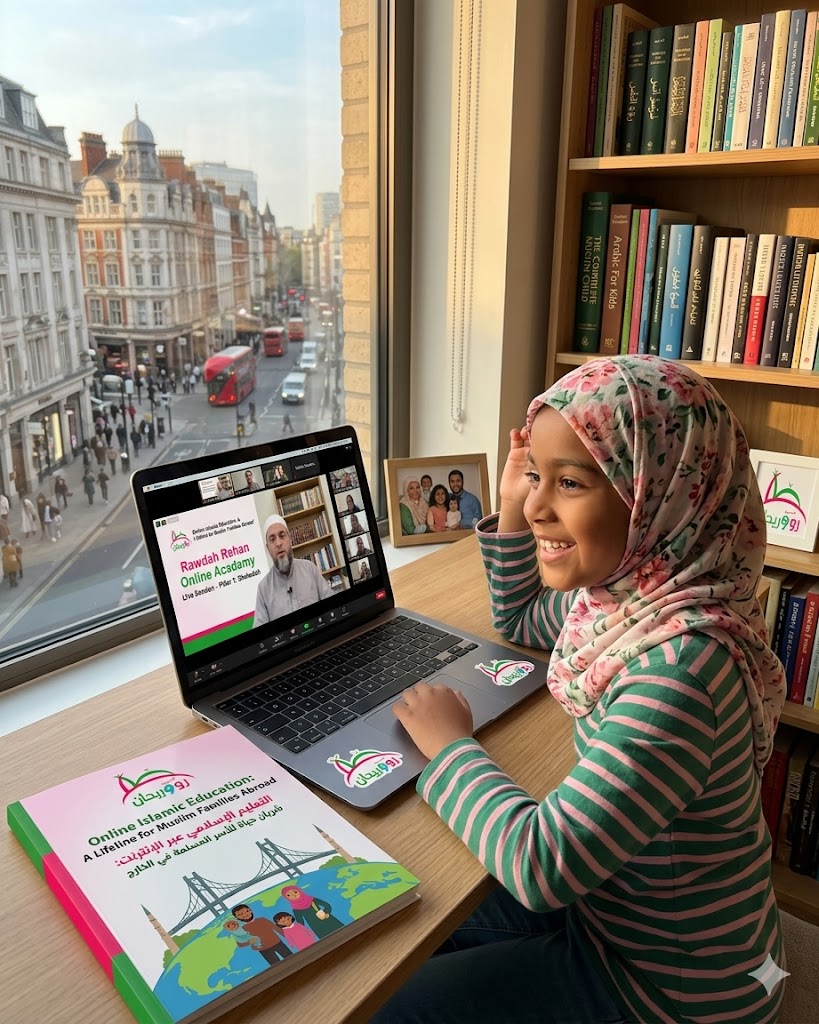
When you enroll your child in an online 1-on-1 Quran class, you are doing much more than teaching them Arabic. You are introducing them to a practicing, successful Muslim role model. A friendly, smiling tutor who asks about their day, shares Islamic stories, and praises their progress becomes a powerful anchor for their identity.
4. Teach Them the Stories of the Underdogs
The Quran is filled with stories of people who stood alone against society for the sake of truth. Tell your children the story of the People of the Cave (Ashab Al-Kahf)—young people who refused to succumb to peer pressure. Relate these stories to their daily lives at school. Let them know that being different is not a weakness; in Islam, it is the ultimate strength.