

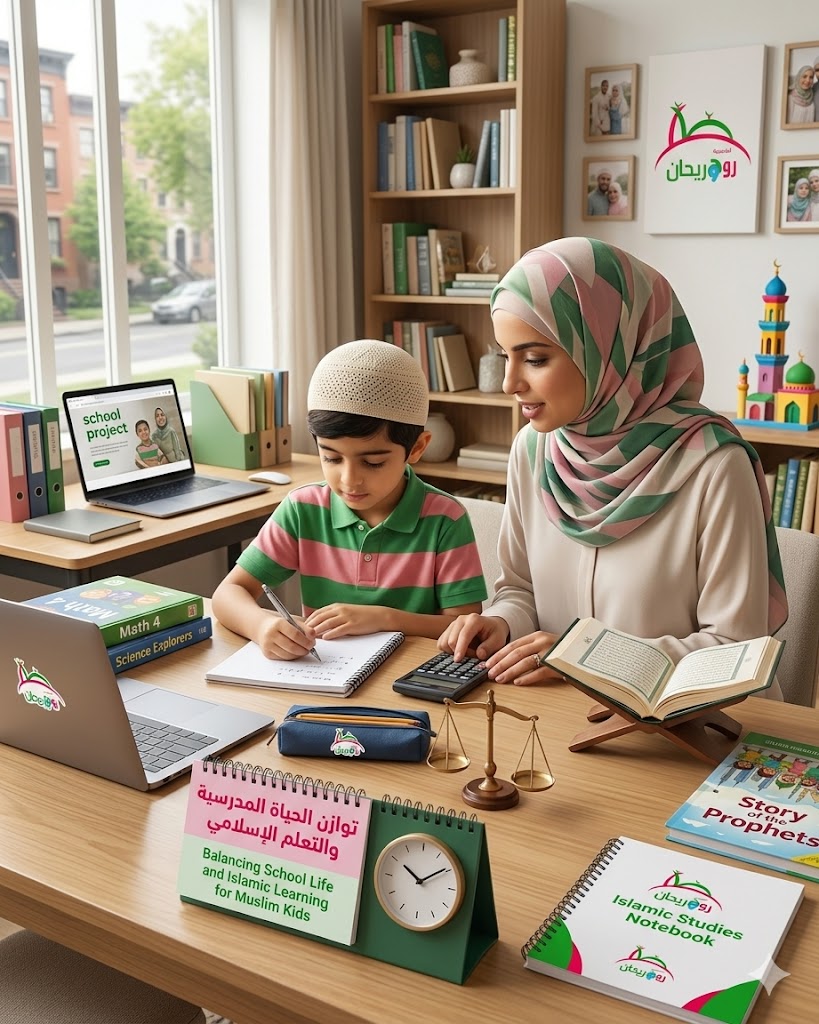
Balancing School Life and Islamic Learning for Muslim Kids
Between math homework, science projects, and soccer practice, finding time for the Quran can feel impossible. Here is how Western Muslim parents can achieve harmony without burning out their kids.
The Overloaded Modern Child
Raising a child in the USA, UK, Canada, or Europe today means navigating a highly demanding educational system. Kids spend 7 to 8 hours a day at school, followed by extracurricular activities, and then come home to hours of homework.
As Muslim parents, we want to prioritize their Islamic education, but adding a rigid, hours-long Islamic school to their weekend often leads to tears, resistance, and burnout. The secret to balancing secular education and Islamic learning lies in integration and flexibility, rather than adding more heavy burdens to their plate.
1. The “Micro-Learning” Approach
Children do not need hours of daily Quran instruction to make progress. In fact, prolonged sessions after a long day of public school are counterproductive. The most effective method is “micro-learning.”
Schedule a focused, interactive 30-minute online session, two to three times a week. This short burst of learning easily fits into the gap between afternoon snacks and homework time. It keeps their minds fresh and prevents the Quran from feeling like “punishment.”
2. Leverage Flexibility (Control Your Schedule)
The biggest issue with traditional weekend Madrasas is the rigid schedule. If your child has a Saturday morning soccer game or is exhausted from exam week, you are forced to miss class or drag a crying child to the mosque.
Online 1-on-1 classes give you complete control. At Rouh & Rehan Academy, you pick the exact days and times that work for your family’s unique rhythm. If Tuesday evenings are free, that becomes Quran time. If they need to pause during mid-terms, you simply reschedule.
Stop stressing over impossible schedules.
Fit Quran learning seamlessly into your child’s busy week. Our Al-Azhar certified tutors are available 24/7 to match your exact local time zone, ensuring learning happens when your child is most alert.
Claim Your 2 Free Flexible Classes3. Redefining “Screen Time”
Many parents worry: “My child is already looking at screens for school and gaming; won’t online Quran classes just add to screen fatigue?”
It is important to distinguish between passive and active screen time. Passively scrolling through YouTube drains a child’s brain. However, an interactive 1-on-1 session with a live tutor who is talking, smiling, using digital whiteboards, and playing educational games is highly stimulating and deeply engaging. It transforms the screen from a distraction into a powerful tool for connection.
4. Create a Peaceful Transition
Don’t make your child jump straight from doing difficult math homework into reading the Quran. Create a 15-minute buffer. Let them have a snack, talk about their day, or play outside briefly. A relaxed mind is much more receptive to the words of Allah than a stressed one.