
How to Build a Strong Foundation in Islam as a New Muslim
Avoid the “convert burnout.” Learn how to build a deep, unshakeable, and stress-free Islamic foundation that will sustain your faith for a lifetime.
The “Convert Honeymoon” and the Burnout Trap
When you first embrace Islam, you often experience a profound spiritual high. You want to learn everything immediately: memorize the entire Quran, fast every Monday and Thursday, and change your entire lifestyle overnight.
However, for many new Muslims in the West, this intense sprint leads to a sudden wall of exhaustion known as “convert burnout.” You realize that learning Arabic is challenging, remembering all the rules is overwhelming, and balancing your new faith with your existing Western life is complex. To prevent this, you must stop sprinting. Islam is a lifelong marathon, and every lasting structure requires a solid foundation.
1. Cement Your Core: Understanding Tawheed
Before you stress over the exact hand placement in prayer or the intricacies of Islamic finance, you must understand the essence of your faith: Tawheed (the absolute Oneness of Allah).
If your foundation in Tawheed is weak, every rule in Islam will feel like a heavy burden. But when you truly understand who Allah is—His mercy, His wisdom, and His power—following His guidance becomes an act of love and trust. Spend your first few months simply studying the Names and Attributes of Allah.
2. Establish the Lifeline: Your Salah
Prayer is the oxygen of a Muslim’s soul. As a beginner, do not obsess over reciting perfect Arabic. Focus on the habit of showing up five times a day.
If you can only read transliteration off a piece of paper, that is perfectly fine. If you stumble over the words, remember that Allah rewards your struggle. The goal right now is consistency, not perfection. Make Salah your non-negotiable anchor in a fast-paced world.
Build your foundation with a trusted guide.
You don’t have to figure it all out alone. Let our compassionate, Al-Azhar certified tutors gently guide you through the basics of the Quran and Islam in a private, 1-on-1 setting.
Claim Your 2 Free Mentorship Classes3. Implement the Sunnah Gradually
The Sunnah (the prophetic lifestyle) is vast. Trying to adopt every practice of the Prophet Muhammad (PBUH) in one week is impossible. The Prophet himself said, “Make things easy for people and do not make them difficult.”
Pick one small Sunnah to add to your life each month. Start by entering your home with a greeting of peace (Salam), or eating with your right hand, or smiling more often (which is considered charity in Islam). Gradual change is permanent change.
4. The Crucial Role of “Suhba” (Companionship)
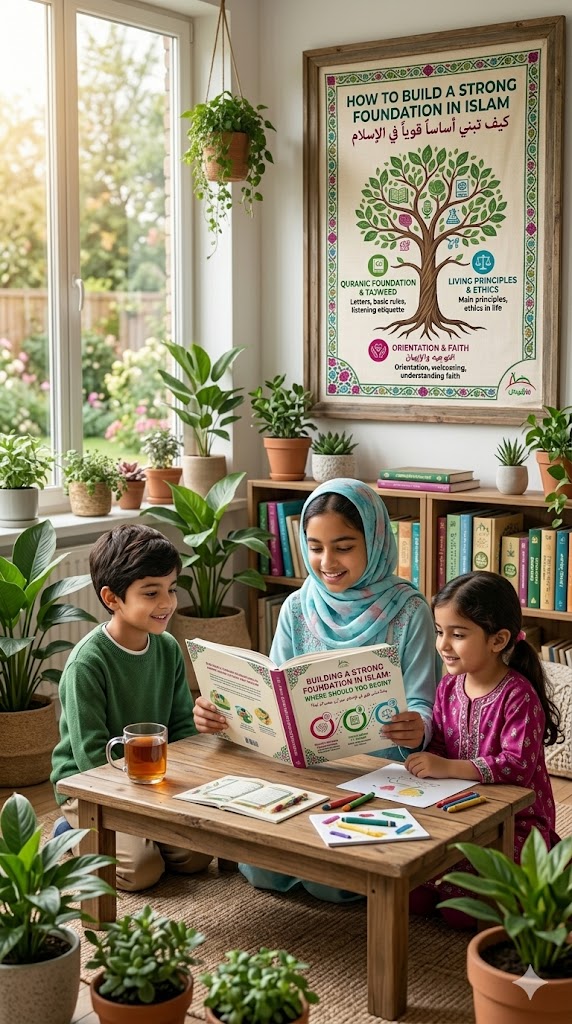
A brick cannot form a wall on its own; it needs cement and other bricks. In Islam, your environment matters immensely. If you try to learn Islam purely through Google searches, you will inevitably encounter extreme or confusing opinions.
You need a mentor. Taking 1-on-1 online classes is not just about learning to read the Arabic alphabet; it is about having a weekly touchpoint with a practicing, balanced, and knowledgeable Muslim. Your tutor becomes a safe harbor where you can ask real questions about navigating life in the West as a new believer.