
Master Quran Reading & Tajweed Online
A complete online journey for kids and adults to learn Quran recitation, Tajweed rules, Makharij, Noorani Qaida, Tilawah, and Hifz with confidence.

For Muslim families living in the USA, UK, Canada, and Europe, finding a qualified and consistent Quran teacher is not always easy. Busy schedules, school routines, and family commitments can make in-person classes difficult. That is why our Online Quran Classes are designed to bring authentic learning directly into your home.
At Rouh & Rehan Academy, we focus on much more than simple reading. We help students build a strong foundation in Quran Reading, Tajweed Rules, Makharij, and fluent Tilawah. Whether the learner is a complete beginner or already recites but wants correction, we provide a structured plan with live guidance and precise feedback.
Why Learning Tajweed Matters
The science of Tajweed refers to the rules that govern proper pronunciation during Quran recitation. It helps the reciter give each letter its proper right and quality, and it is directly tied to preserving correct recitation. Wikipedia summarizes Tajwid as the rules of correct pronunciation in Quran recitation, while Islamweb emphasizes its importance in preventing major and subtle mistakes in reciting the Quran. :contentReference[oaicite:2]{index=2}
A major part of that precision is understanding the Makharij of letters, meaning the articulation points from which letters are pronounced. In Tajwid-related explanations, these articulation points are central to distinguishing sounds properly and avoiding meaning errors during recitation. :contentReference[oaicite:3]{index=3}
Learning Quran recitation also carries spiritual value. Islamweb’s articles on the virtues of reading the Quran describe recitation as a source of reward, reflection, comfort, and closeness to Allah, while stressing that recitation with care and correctness is especially important. :contentReference[oaicite:4]{index=4}
Structured Progress
Follow an organized path from beginner reading to strong fluency, memorization, and correction.
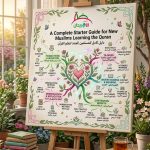
Quran Reading & Tajweed Mind Map
Quran Reading Mastery
A complete learning system covering reading, Tajweed, Makharij, Noorani Qaida, fluency, Hifz, and spiritual growth.
🔤 Noorani Qaida Foundation
Start with Arabic letters, Harakat, joined letters, and reading basics for kids and beginners.
🎙️ Makharij & Letter Sounds
Learn where every letter comes from and how to pronounce it correctly with clarity and control.
📚 Tajweed Rules
Study Tajweed, elongation, stopping rules, heavy and light letters, and recitation accuracy.
🧠 Reading Confidence
Move from slow letter-by-letter reading to smooth, connected, and confident Quran recitation.
🌟 Tilawah & Tarteel
Recite beautifully with balance, reflection, and controlled rhythm using guided correction.
🕋 Hifz & Long-Term Growth
Continue from reading fluency into memorization, revision habits, and stronger lifelong connection to the Quran.
Student Journey Map
Arabic letters, short vowels, and sound awareness.
Makharij, letter distinction, and mouth positioning.
Tajweed application, stopping, stretching, and rhythm.
Independent recitation with fewer mistakes and greater confidence.
Hifz, revision schedule, and long-term consistency.
What Makes Our Quran Program Different
Our approach is built for real-life families and real student progress. We do not rely on random lessons. Instead, we create a clear step-by-step structure that balances reading skills, Tajweed correction, repetition, confidence-building, and age-appropriate teaching. This makes the program ideal for Quran classes for kids, Quran classes for adults, and learners who need a private Quran tutor online.
Students also benefit from explanatory keywords and clickable educational terms inside the content. For example, terms such as Tajweed, Tarteel, and importance of Tajweed become learning anchors that readers can explore directly.
Kids-Friendly Learning
Interactive pacing, repetition, and visual simplicity for young learners.
Adults-Friendly Schedule
Flexible planning for busy parents, workers, and students across time zones.
Keyword-Rich Content
SEO-friendly structure with naturally placed search terms and educational anchors.
Live Correction
Immediate tutor feedback to fix pronunciation, rhythm, stopping, and articulation.
Frequently Asked Questions
These are some of the most common questions parents and adult learners ask before joining our online Quran reading and Tajweed classes.
At what age can my child start Quran reading online?
Do I need to know Arabic before learning Tajweed?
What is the difference between Quran reading and Tajweed?
What are Makharij in simple words?
How many classes per week are recommended?
Are your Quran classes private or group-based?
Can I learn Hifz after improving my Tajweed?
Why are there clickable explanation words in the article?
Educational Keywords & Helpful Reference Links
Here are some explanatory words and linked terms embedded naturally in the content to improve readability, SEO, and user trust:
Start Your Quran Reading Journey Today
Experience a structured, elegant, and spiritually meaningful learning path with native tutors, private classes, clickable educational references, keyword-rich content, FAQs, and a professional presentation designed for both trust and conversion.
Claim My 2 FREE Trial Classes