
A 30-Minute Arabic Study Plan for Busy Learners
Thirty focused minutes can produce useful progress when review is protected and one main language skill receives most of the session. This guide breaks the subject into practical stages so that children, adults and families can see what to work on next without turning the lesson into an unnecessarily complicated system.
Thirty focused minutes can produce useful progress when review is protected and one main language skill receives most of the session.

Begin with retrieval instead of rereading
One of the most useful parts of learning a thirty-minute Arabic study routine is begin with retrieval instead of rereading. This is where a general idea becomes something the learner can actually notice and practise. Thirty focused minutes can produce useful progress when review is protected and one main language skill receives most of the session. Keep the task small enough for the student to repeat it carefully, then change the example slightly to check whether the understanding transfers. For non-native learners, Arabic becomes more manageable when one new pattern is practised with familiar vocabulary. The student should not have to solve pronunciation, grammar and twenty new words at the same moment.
Give most of the session to one main skill
Good progress in a thirty-minute Arabic study routine often depends on give most of the session to one main skill. The aim is not to make the learner dependent on one memorized example, but to build a pattern they can recognise again. Thirty focused minutes can produce useful progress when review is protected and one main language skill receives most of the session. Teacher feedback is most useful here when it points to one specific adjustment and gives the learner another immediate attempt. Recognition usually develops before fast production. Repeated exposure gives the learner time to notice the pattern until it begins to feel familiar rather than translated consciously from another language.
Thirty focused minutes can produce useful progress when review is protected and one main language skill receives most of the session.
Review vocabulary in context
One of the most useful parts of learning a thirty-minute Arabic study routine is review vocabulary in context. This is where a general idea becomes something the learner can actually notice and practise. Thirty focused minutes can produce useful progress when review is protected and one main language skill receives most of the session. Keep the task small enough for the student to repeat it carefully, then change the example slightly to check whether the understanding transfers. Examples are more useful than isolated terminology. A grammar or vocabulary point should return inside a phrase, sentence or short text so the learner can see what the idea actually does.
Finish with an independent test
One of the most useful parts of learning a thirty-minute Arabic study routine is finish with an independent test. This is where a general idea becomes something the learner can actually notice and practise. Thirty focused minutes can produce useful progress when review is protected and one main language skill receives most of the session. Keep the task small enough for the student to repeat it carefully, then change the example slightly to check whether the understanding transfers. Speaking, reading and listening support each other but do not develop at identical speeds. A good learning plan gives the weakest skill enough attention without abandoning the stronger ones.
Continue learning: Quranic Arabic vs Modern Standard Arabic · How to Build Arabic Vocabulary That Actually Sticks

Rotate the main skill through the week
One of the most useful parts of learning a thirty-minute Arabic study routine is rotate the main skill through the week. This is where a general idea becomes something the learner can actually notice and practise. Thirty focused minutes can produce useful progress when review is protected and one main language skill receives most of the session. Keep the task small enough for the student to repeat it carefully, then change the example slightly to check whether the understanding transfers. Progress can be measured by what the learner can understand or produce without notes. Retrieval, new texts and slightly changed examples show whether the knowledge has become usable.
Watch and reinforce the idea
A clear demonstration can make the next lesson easier to recognise and practise.
Questions learners often ask
What should I focus on first with a thirty-minute Arabic study routine?
Begin with begin with retrieval instead of rereading. Thirty focused minutes can produce useful progress when review is protected and one main language skill receives most of the session.
What commonly slows progress with a thirty-minute Arabic study routine?
Progress often slows when the learner moves ahead before review vocabulary in context is stable. Keep the practice specific enough to identify the recurring problem.
When is teacher guidance useful for a thirty-minute Arabic study routine?
A teacher is especially useful when the learner cannot tell whether the current attempt is accurate, keeps repeating the same difficulty or needs help deciding the next appropriate learning step.

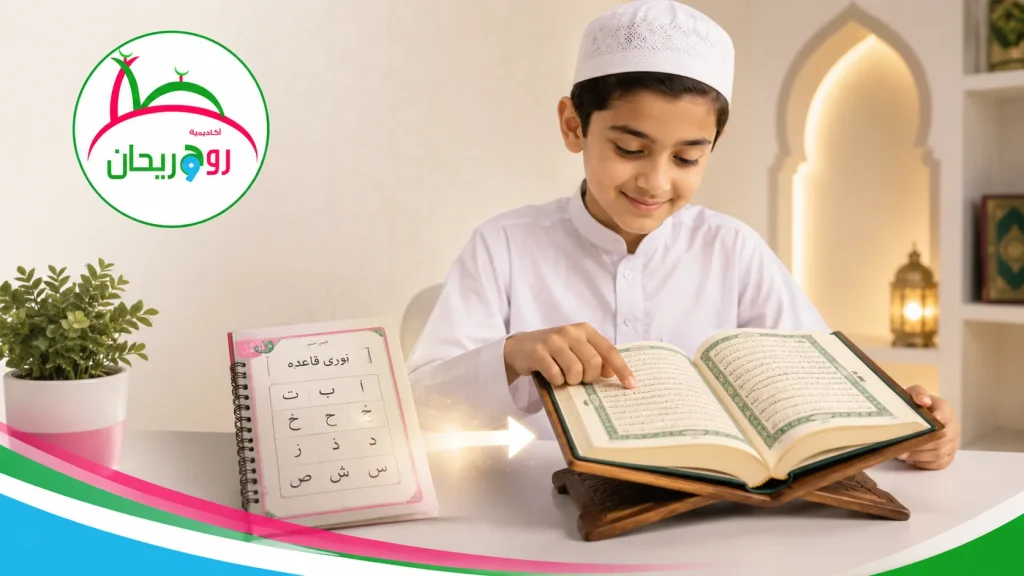

Learn with a plan that fits your real level.
Meet a teacher, try a real online lesson and decide what Quran, Arabic or Islamic Studies path fits you or your child.

A thirty-minute routine becomes more effective when each session supports a
clear long-term pathway. The
Online Arabic Program
can help organise reading, vocabulary, grammar and communication goals, while
our teachers
can help adjust the plan to the learner’s level.