
How to Find Reliable Islamic Learning Sources Online
Online Islamic content should be evaluated by its evidence, teacher qualifications, context and connection to reliable scholarship rather than popularity alone. This guide breaks the subject into practical stages so that children, adults and families can see what to work on next without turning the lesson into an unnecessarily complicated system.
Online Islamic content should be evaluated by its evidence, teacher qualifications, context and connection to reliable scholarship rather than popularity alone.

Look for clear Islamic sourcing
One of the most useful parts of learning reliable Islamic learning sources is look for clear Islamic sourcing. This is where a general idea becomes something the learner can actually notice and practise. Online Islamic content should be evaluated by its evidence, teacher qualifications, context and connection to reliable scholarship rather than popularity alone. Keep the task small enough for the student to repeat it carefully, then change the example slightly to check whether the understanding transfers. Islamic Studies for beginners should begin with clear foundations and reliable sources. The purpose is understanding that supports worship and character, not collecting difficult terminology before the learner knows how it affects daily Muslim life.
Check who is teaching
Good progress in reliable Islamic learning sources often depends on check who is teaching. The aim is not to make the learner dependent on one memorized example, but to build a pattern they can recognise again. Online Islamic content should be evaluated by its evidence, teacher qualifications, context and connection to reliable scholarship rather than popularity alone. Teacher feedback is most useful here when it points to one specific adjustment and gives the learner another immediate attempt. Practical subjects are easier to remember when the learner sees where they appear in worship, family life or personal choices. Teaching should therefore connect the lesson to a recognisable situation without oversimplifying the religious principle.
Online Islamic content should be evaluated by its evidence, teacher qualifications, context and connection to reliable scholarship rather than popularity alone.
Be careful with very short clips
Good progress in reliable Islamic learning sources often depends on be careful with very short clips. The aim is not to make the learner dependent on one memorized example, but to build a pattern they can recognise again. Online Islamic content should be evaluated by its evidence, teacher qualifications, context and connection to reliable scholarship rather than popularity alone. Teacher feedback is most useful here when it points to one specific adjustment and gives the learner another immediate attempt. General educational material has limits. Detailed personal rulings, unusual circumstances or disputed questions should be taken to a qualified and trustworthy teacher who can understand the specific case.
Separate general education from personal fatwa
Good progress in reliable Islamic learning sources often depends on separate general education from personal fatwa. The aim is not to make the learner dependent on one memorized example, but to build a pattern they can recognise again. Online Islamic content should be evaluated by its evidence, teacher qualifications, context and connection to reliable scholarship rather than popularity alone. Teacher feedback is most useful here when it points to one specific adjustment and gives the learner another immediate attempt. Children and new Muslims usually benefit from a clear sequence: foundation first, practice second and deeper detail later. This protects the learner from confusion while leaving room for more advanced study.
Continue learning: How to Teach Islam to Children Without Making It Feel Like a Lecture · How to Build an Islamic Learning Routine at Home
Build a small trusted learning network
It is easy to overlook build a small trusted learning network when studying reliable Islamic learning sources, especially when the learner is eager to move to the next page, rule or level. Online Islamic content should be evaluated by its evidence, teacher qualifications, context and connection to reliable scholarship rather than popularity alone. A stronger approach is to slow down long enough to identify the exact skill, practise it with purpose and then test it again in a slightly different situation. Knowledge should lead to action. A useful review asks not only what the student remembers, but also whether the lesson has clarified worship, belief or character in a way that can be applied.
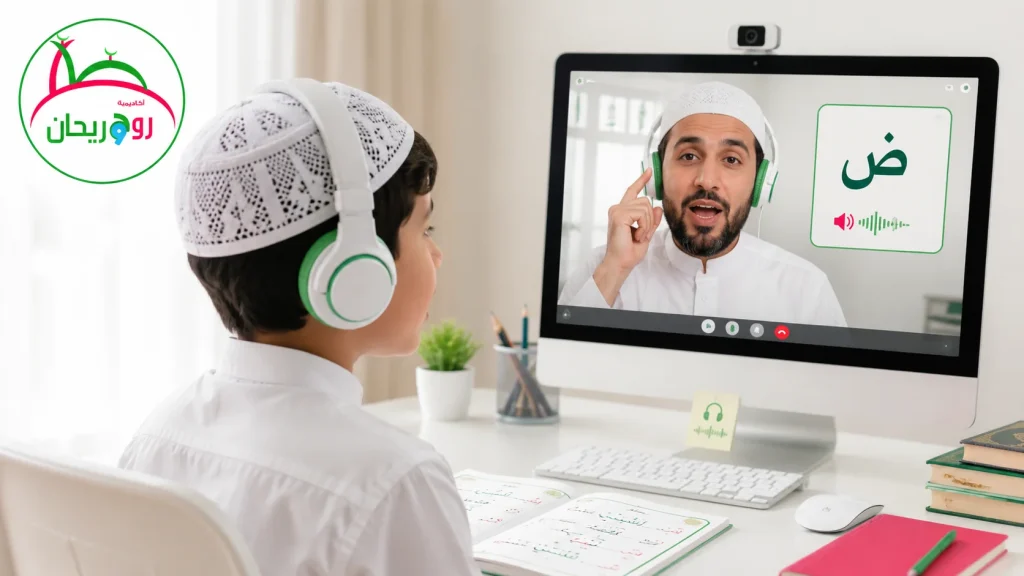
Watch and reinforce the idea
A clear demonstration can make the next lesson easier to recognise and practise.
Questions learners often ask
What should I focus on first with reliable Islamic learning sources?
Begin with look for clear Islamic sourcing. Online Islamic content should be evaluated by its evidence, teacher qualifications, context and connection to reliable scholarship rather than popularity alone.

What commonly slows progress with reliable Islamic learning sources?
Progress often slows when the learner moves ahead before be careful with very short clips is stable. Keep the practice specific enough to identify the recurring problem.
When is teacher guidance useful for reliable Islamic learning sources?
A teacher is especially useful when the learner cannot tell whether the current attempt is accurate, keeps repeating the same difficulty or needs help deciding the next appropriate learning step.
Learn with a plan that fits your real level.
Meet a teacher, try a real online lesson and decide what Quran, Arabic or Islamic Studies path fits you or your child.
Reliable Islamic learning depends not only on finding information but also on
learning within a clear and responsible framework. Explore the
Online Islamic Studies Program
and
our Islamic Studies teachers
for a structured next step.