Does Learning Arabic Help You Understand the Quran?
Yes, Arabic can change the way you encounter the Quran. A word that once existed only through translation begins to feel familiar, recurring structures become visible and connections between verses are easier to notice. That does not mean a language course makes a learner an interpreter of revelation.
Arabic improves direct access to Quran vocabulary and structure, while reliable Tafsir and scholarly explanation remain necessary for interpretation and deeper religious context.
High-frequency words begin to become direct
When a common Quranic word appears again and again, you gradually stop translating it consciously. The Arabic itself begins carrying meaning. How to Build Arabic Vocabulary is especially useful when the vocabulary list is organised around words the learner repeatedly meets in Quran.
Grammar shows relationships a word list cannot
A translation may give the overall meaning without showing how the Arabic sentence is built. Basic Arabic grammar helps the learner notice pronouns, emphasis, relationships between words and repeated structures. That creates a richer reading experience even before advanced language study.

The two should support each other rather than being confused with each other.
Language knowledge is not the same as Tafsir
A dictionary meaning is only one piece of understanding. Revelation has context, Prophetic explanation, scholarly interpretation and legal or theological implications. Arabic helps you access the text; it does not remove the need for reliable scholarship when discussing what an Ayah teaches.
Quranic Arabic can be a motivating entry point
Some learners struggle to stay motivated with general language exercises but become highly engaged when every lesson reveals a word or pattern they recognise in prayer. Quranic Arabic vs Modern Standard Arabic can help you decide how specialised your path should be.
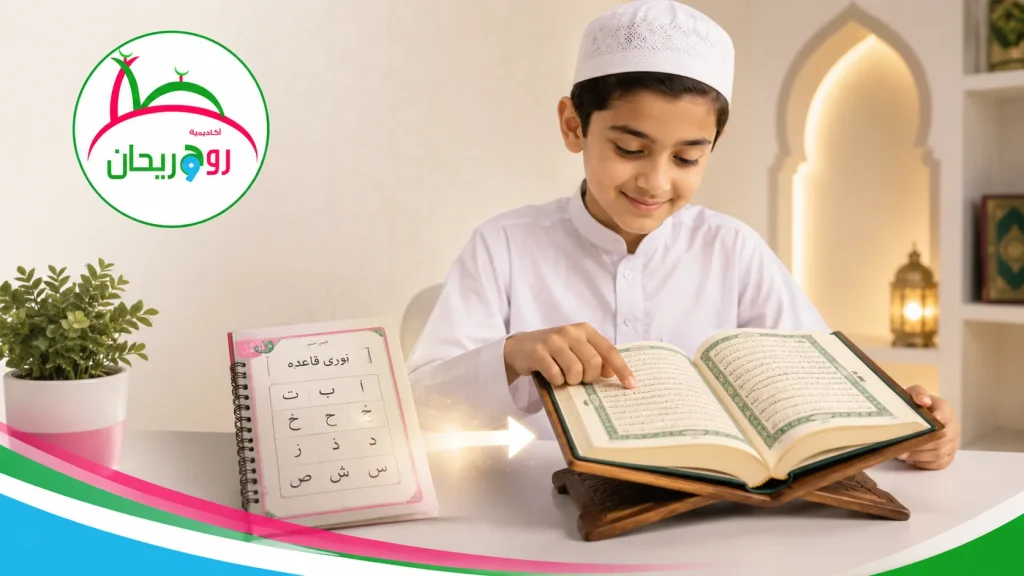
Combine Arabic with recitation instead of replacing it
Understanding a word does not automatically improve pronunciation, and fluent recitation does not automatically produce comprehension. Rouh & Rihan treats Quran reading, Arabic and Islamic Studies as connected but distinct pathways. Explore them on the Programs page.

Watch and understand the idea
A useful video can make the idea easier to hear or see before you practise it in your own lesson.
Questions learners often ask
Do I need fluent Arabic to benefit from Quranic Arabic?
No. Even a growing vocabulary and basic grammar can help you recognise recurring words and structures.
Can I stop reading translations once I learn Arabic?
Most learners continue benefiting from reliable translations and Tafsir while their Arabic develops.
Should I learn MSA or Quranic Arabic first?
Choose according to your main goal. Quran-focused learners often benefit from prioritising Quranic vocabulary and structures.
Arabic can deepen access to Quran vocabulary and meaning, but language
development itself needs a structured plan. The
Online Arabic Program
provides a pathway through reading, vocabulary, grammar and communication for
non-Arabic speakers.
Learn with a teacher who starts from your real level.
Explore the learning paths or meet a teacher first. You can try the lesson and decide whether the pace and teaching style feel right.